PROJECT: ESCHER MUSEUM
YEAR: 2022
LOCATION: The Hague, The Netherlands
NATURE: Academic
UNIVERSITY: TU DELFT
COURSE: Parametric Design
GRADE: 9/10
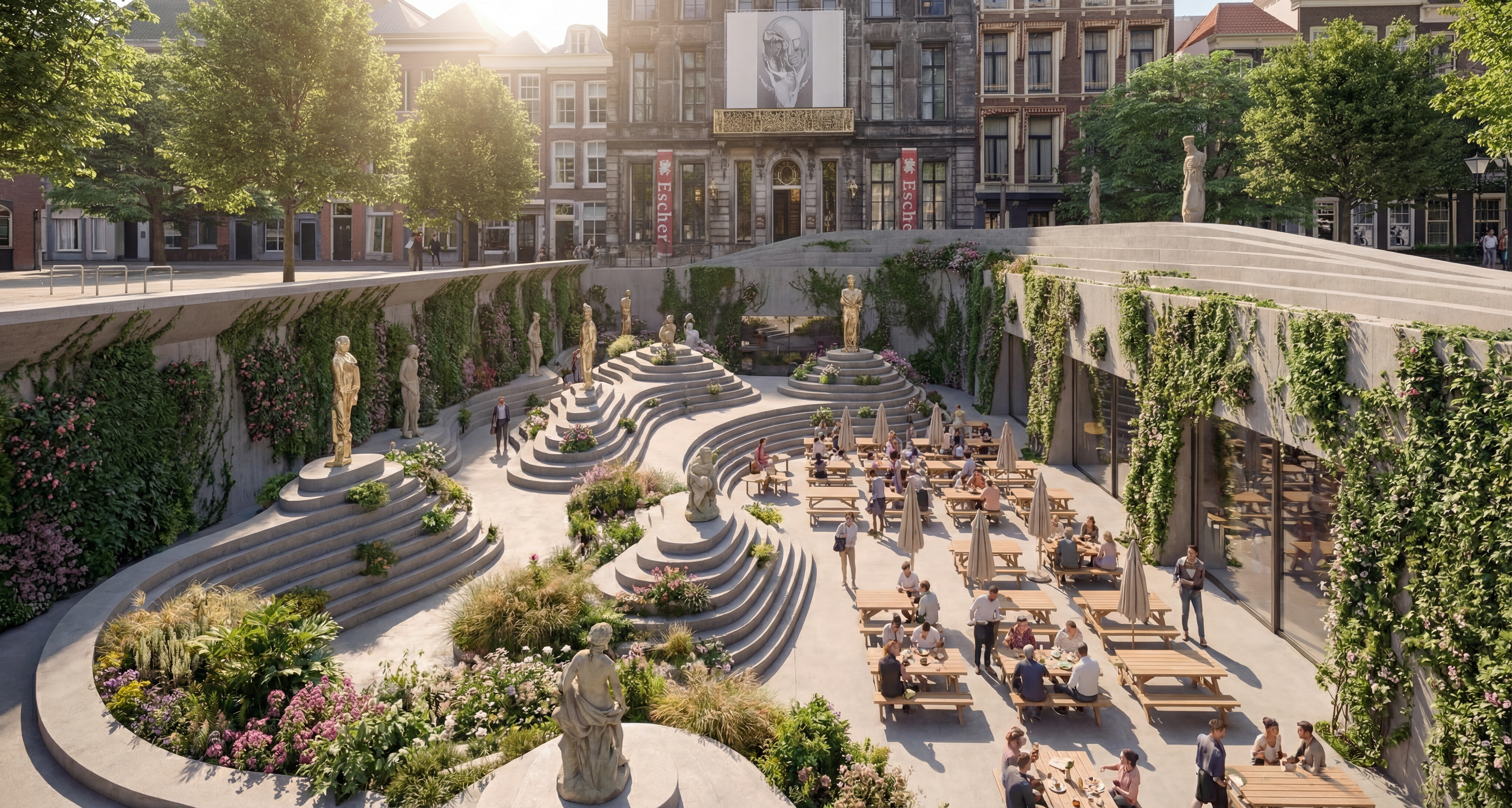
In this computational design course, I was introduced to the concept of parametric design. The assignment was to create a sculpture garden for the Escher museum in The Hague. The garden is located below ground level and serves as entrance for the museum as well as for a restaurant. The restaurant has a terrace within the sculpture garden. The roof of the terrace had to be optimized for sunlight. During the hot summer months, the terrace should provide enough shade for customers, while in mid-season, it should receive enough sun for comfort. The design seamlessly blends into the streetscape of the location and features a captivating display of stairs, sculptures, and vegetation below ground level, complementing the work of the illusionist M. C. Escher. The design has been made and optimized with customized Grasshopper scripts.
DESIGN
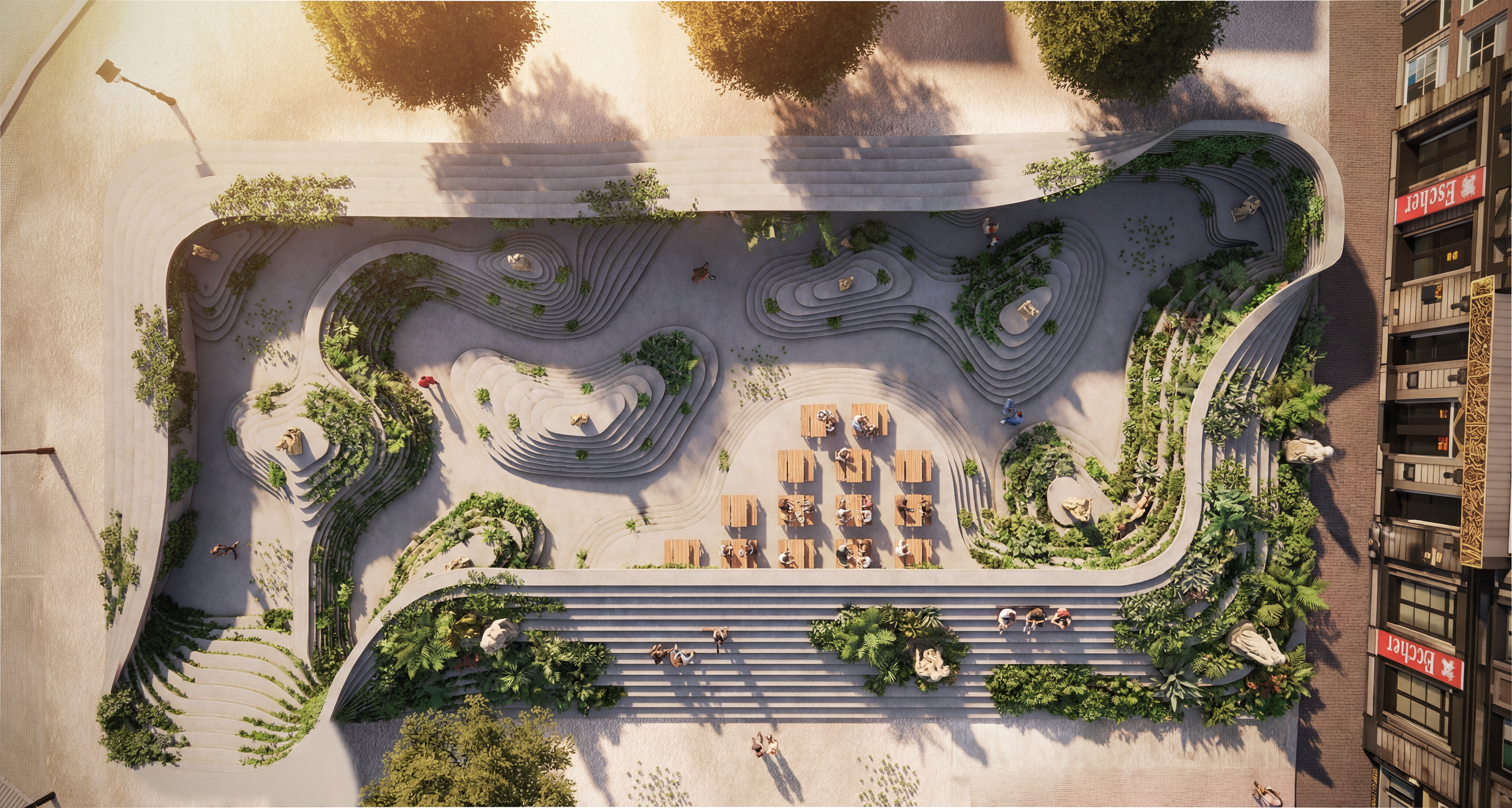
The lowered sculpture garden, adorned with curved stairs, offers a captivating experience, inspired by Escher’s mind-bending creations. The fluidity of the garden’s paths leads visitors on a meandering exploration, encouraging them to pause, observe, and immerse themselves in the beauty of exhibited artworks. As one ascends through platforms, sculptures play with surreal stairways, creating a captivating play between reality and illusion. The restaurant’s terrace harmoniously integrates into the garden, allowing people to revel in artistic allure. This design pays homage to Escher’s legacy, providing an unforgettable journey through art and space, an experience worthy of The Hague’s Escher Museum.
GRASSHOPPER
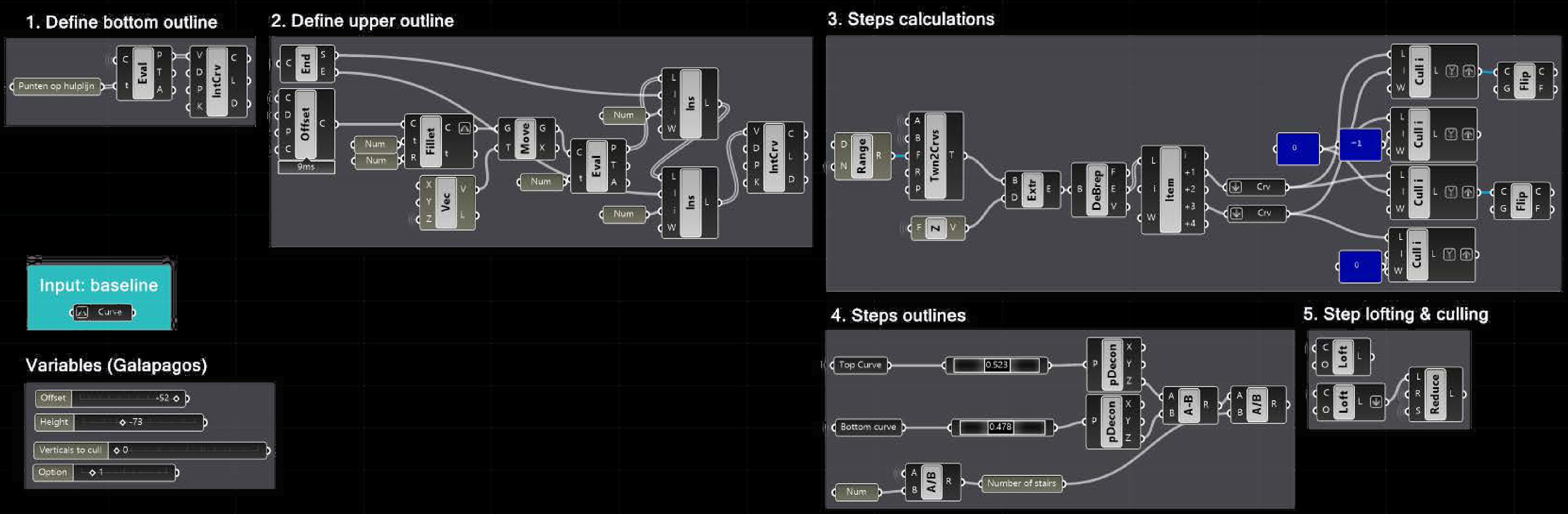
Grasshopper was used to bring my vision to life for the dynamic lowered sculpture garden. Grasshopper’s flexibility allowed me to generate an intricate network of curved stairs and platforms, ensuring an organic and harmonious layout. By leveraging its parametric approach, adjustments could swiftly be made to one element, automatically influencing the entire design, saving valuable time and effort. To optimize the experience for visitors, a sunpath analysis was integrated in Grasshopper. This feature enabled me to study and fine-tune the terrace’s layout as well as the shape of the roof, ensuring the terrace received optimal sunlight during preferred times. The software’s simulation capabilities allowed me to achieve a seamless flow of light, enhancing the overall ambiance of the space. As I move forward in my career, this powerful tool will undoubtedly continue to play a vital role in shaping visionary projects.